
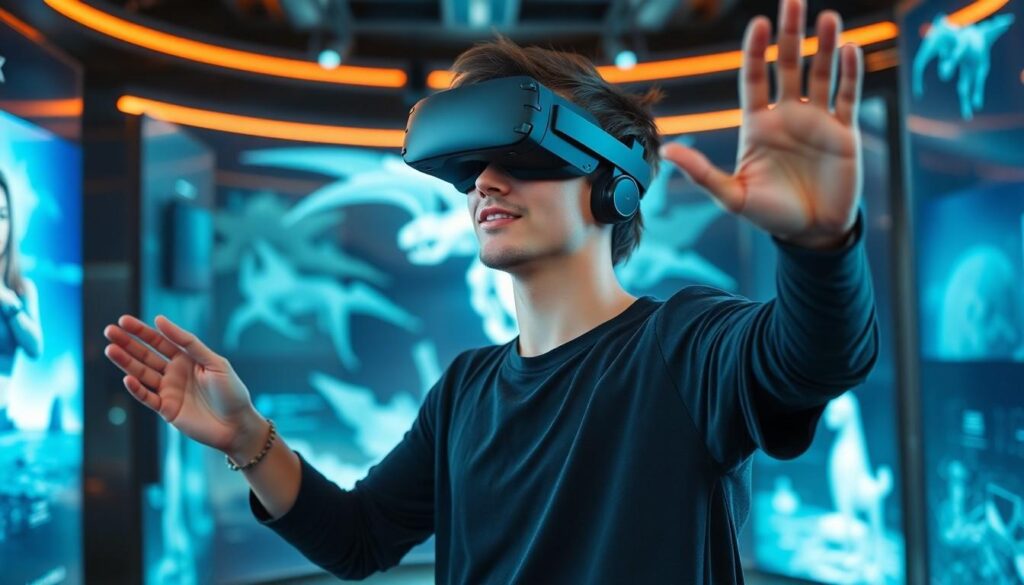
Imagine slipping into a virtual world so immersive that you forget reality exists. Full dive VR promises to transport users into fantastical realms where they can slay dragons or sip cocktails on a beach—all without leaving their couch. But is this futuristic dream merely a pipe dream or something that could become reality?
Overview of Full Dive VR
Full dive virtual reality (VR) represents the pinnacle of immersive technology. This concept taps into human senses, allowing users to experience virtual worlds as if they were physically present. Creating a realistic full dive VR experience requires intricate interfaces and advanced technologies that synchronize with the brain and body.
Current VR systems primarily engage sight and sound. Visual immersion occurs through headsets that display three-dimensional environments. Interaction often uses handheld controllers, providing feedback through vibrations and motion tracking. While these systems enhance user experiences, they don’t fully replicate the sensations associated with true immersion.
Further advancements in brain-computer interfaces (BCIs) could pave the way for full dive VR. BCIs could directly translate thoughts into actions within virtual environments. Research from institutions like the University of California, Berkeley indicates potential in reading brain waves and interpreting neural signals. Successful development of such technology would eliminate the need for physical devices, allowing users to interact seamlessly with digital worlds.
Limitations currently exist in developing realistic tactile feedback. Haptic technology provides basic sensations but lacks precision in simulating complex experiences. For example, feeling the weight of a sword or the warmth of sunlight needs further innovations.
Exploration of ethical implications poses another challenge. Concerns around addiction and detachment from reality emerge with the potential for full immersion. Studies highlight the necessity for frameworks that prioritize mental health and user safety.
Ongoing research and technological breakthroughs point toward possibilities in full dive VR. Innovations in neuroscience and computing continue to push boundaries, inching closer to making this immersive dream a reality.
Current State of Virtual Reality Technology

Current virtual reality technology aims to create immersive experiences that may pave the way toward full dive VR. Progress in this field shows promise, with advancements continuously shaping its future.
Key Concepts in VR
Virtual reality focuses on creating environments that stimulate human senses. Users interact with these environments through headsets and motion tracking devices. Immersion relies on visual and auditory stimuli, which create a sense of presence. Expanding the definition of virtual reality includes tactile feedback, which enhances the experience. Brain-computer interfaces (BCIs) represent a groundbreaking development, allowing thoughts to guide actions within virtual realms. By interpreting neural signals, BCIs could offer an unprecedented level of interaction. These innovations suggest that full dive VR may eventually become feasible.
Limitations of Existing VR Systems
Existing VR systems have notable limitations that hinder immersion. Visual fidelity often falls short, leading to a disconnection from reality. Latency issues can disrupt seamless interactions, causing user frustration. Current hardware primarily engages sight and sound, neglecting other senses crucial for full immersion. Tactile feedback remains rudimentary and does not accurately replicate real-world sensations. Battery life and comfort pose additional challenges, as heavy equipment can reduce the user experience. Ethical implications, such as addiction and detachment from reality, demand serious consideration. Addressing these limitations is essential for advancing toward the vision of full dive VR.
The Science Behind Full Dive VR
Full dive VR relies on advanced technologies that bridge the gap between human cognition and virtual environments. Neural interface technologies serve as foundational elements in this exploration.
Neural Interface Technologies
Neural interface technologies focus on the connection between the brain and external devices. These systems interpret electrical signals from the brain, enabling communication with computers. Recent developments in electrode technology demonstrate potential for more precise data collection. Scientists work on non-invasive and invasive methods to improve signal clarity and reduce interference. Effective neural interfaces could allow users to interact with virtual worlds through thought alone, paving the way for seamless immersion.
Brain-Computer Interfaces (BCI)
Brain-computer interfaces (BCIs) represent a critical component in full dive VR. BCIs translate neural signals into commands, allowing users to control digital environments directly. Various research initiatives explore decoding techniques, aiming to enhance the accuracy of these systems. Prominent studies highlight the success of BCIs in assisting individuals with movement impairments, showcasing their practical applications. As researchers refine these technologies, BCIs may soon enable comprehensive interactions within virtual landscapes, shifting paradigms in how individuals engage with digital experiences.
Potential Applications of Full Dive VR
Full dive VR has numerous potential applications across various fields, enhancing user experiences significantly. These applications offer exciting opportunities for innovation and engagement.
Gaming and Entertainment
Gaming stands to gain immensely from full dive VR technology. Players could immerse themselves in vast, dynamic worlds, experiencing adventures like never before. They’d interact with environments beyond traditional controls, feeling textures and sensations that amplify realism. Multiplayer experiences could also transform, allowing players to join together in shared spaces, promoting collaboration and social interaction. Full dive VR could redefine storytelling, enabling users to become active participants in narratives rather than passive observers.
Education and Training
Educational institutions may revolutionize learning methodologies through full dive VR. Students could explore historical sites, conduct scientific experiments, or engage in complex simulations without leaving the classroom. Hands-on training in fields such as medicine or engineering could enhance safety and efficiency. Realistic simulations offer learners the chance to practice skills and gain experience in controlled environments. Additionally, immersive experiences can cater to various learning styles, making education more engaging and effective across demographics.
Challenges and Ethical Considerations
The development of full dive VR presents several notable challenges and ethical considerations that demand attention.
Safety and Health Risks
Safety and health risks represent critical concerns with full dive VR technology. Physical injuries may result from disorientation or falls while users interact within virtual environments. Long sessions could lead to eye strain or motion sickness, manifesting as headaches or nausea. Researchers have not fully studied the long-term effects of immersive experiences on mental health. Additional concerns involve the potential for addiction, as users might prefer virtual realities over real-world interactions. Maintaining a balance between virtual engagement and real-life responsibilities becomes essential to mitigate these risks.
Ethical Implications of Immersive Experiences
Ethical implications shape discussions around full dive VR’s capabilities. Users may experience a detachment from reality, triggering existential dilemmas about identity and existence in a simulated world. Issues of privacy arise when data is collected from users’ interactions or neural signals. Additionally, the risk of exploitation is evident in scenarios where vulnerable individuals might become targets for manipulation or harmful content. Addressing these ethical concerns necessitates establishing guidelines ensuring safe and responsible use within the immersive landscape.
Future Prospects of Full Dive VR
Innovations in brain-computer interfaces (BCIs) are shaping the future of full dive VR, creating new opportunities for immersion. Researchers continuously develop more advanced electrodes that enhance neural signal interpretation. Significant advancements in non-invasive methods show promise, potentially leading to better user experiences in virtual environments. Future iterations of these technologies may provide seamless interaction, allowing users to engage with digital worlds like never before.
Applications of full dive VR extend beyond gaming and entertainment. In education, immersive simulations could transform learning by enabling students to experience complex concepts firsthand. Industries focused on training might see effective methods for skill acquisition, utilizing full dive VR for scenarios that require high levels of realism. These developments create an engaging learning atmosphere while offering practical benefits.
Concerns around safety and health must remain at the forefront as the technology evolves. Users may face risks such as motion sickness, eye strain, and mental health issues, which could impact widespread adoption. Ensuring the responsible use of this technology involves addressing addiction risks and privacy concerns associated with data collection. Guidelines will play a crucial role in fostering safe experiences in virtual realities.
The combination of continuous research and technological breakthroughs drives the vision of full dive VR closer to reality. Collaborative efforts across various sectors, including academia and industry, promote innovation while addressing ethical dilemmas. As the landscape evolves, key stakeholders must prioritize user well-being, ensuring that the development of immersive technologies benefits society as a whole.
Full dive VR stands at the intersection of possibility and aspiration. As technology advances rapidly particularly in brain-computer interfaces the dream of immersive experiences is becoming more tangible. However significant challenges remain that need addressing before this vision can be fully realized.
The potential applications in gaming education and training highlight the transformative power of full dive VR. Yet ethical considerations and health risks must not be overlooked. A balanced approach is essential to ensure that users can enjoy the benefits of this technology while minimizing adverse effects.
The journey toward full dive VR is ongoing and collaborative efforts will play a crucial role in shaping its future. With continued innovation and responsible development the dream of truly immersive virtual experiences may soon be within reach.


