
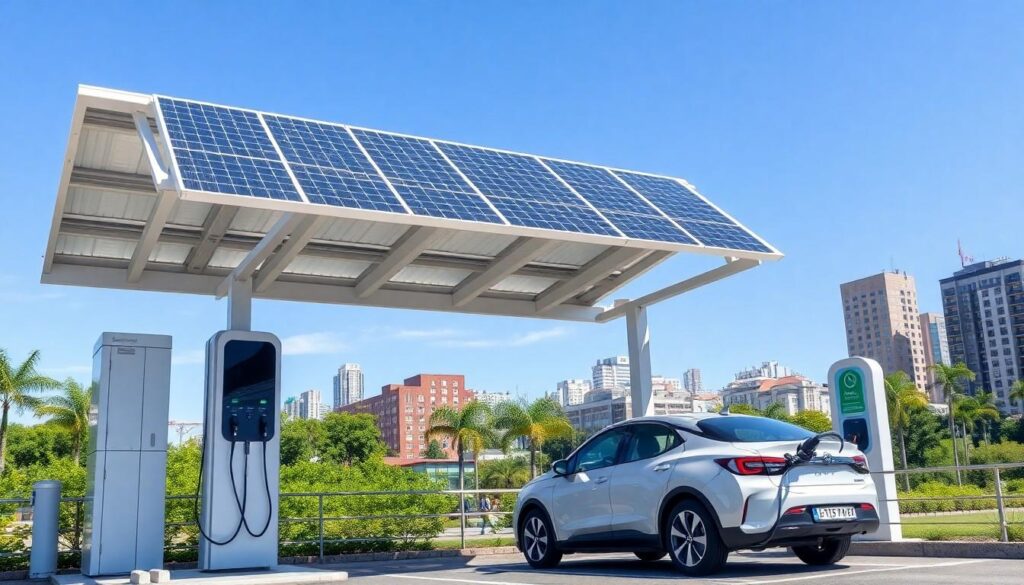
As electric vehicles zoom into the future, the need for charging stations has never been more critical. But why settle for a boring old plug when you can power up with sunshine? Enter solar charging stations—where Mother Nature gets to play the role of your car’s best friend. Imagine cruising around town while your vehicle sips on solar energy like it’s a refreshing smoothie on a hot day.
These eco-friendly powerhouses not only help the planet but also save drivers money in the long run. Who wouldn’t want to charge their ride with free energy from the sun? With advancements in technology and a growing network of solar stations, the future of electric vehicle charging is looking bright—literally! So buckle up as we explore the benefits and innovations of solar charging stations that are changing the way we think about going green on the go.
Overview of Solar Charging Stations for Electric Vehicles
Solar charging stations for electric vehicles utilize photovoltaic technology to convert sunlight into electricity. These stations significantly reduce dependency on fossil fuels. By harnessing renewable energy, they offer a cleaner and more sustainable solution for EV owners.
Installing solar panels at charging stations enhances energy efficiency and helps lower operational costs. Data indicates that solar charging can save drivers up to 50% on electricity bills compared to traditional sources. The use of solar energy mitigates greenhouse gas emissions, contributing to the fight against climate change.
Numerous states and municipalities promote solar charging through incentives and tax breaks. These government programs encourage the establishment of solar infrastructure, making EV charging more accessible. Additionally, solar charging stations can integrate battery storage systems to provide power during peak demand times or low sunlight hours.
Recent innovations include smart charging technology. Smart systems optimize charging schedules based on energy availability and vehicle needs. This ensures efficient energy use, allowing users to charge their vehicles when solar energy production is highest.
Overall, the expansion of solar charging stations aligns with the global shift towards sustainability. With growing interest and investment in renewable energy, the future of solar charging for electric vehicles appears bright. As technology continues to evolve, solar charging stations will play an essential role in green transportation.
Benefits of Solar Charging Stations

Solar charging stations offer numerous advantages for electric vehicle owners and the environment. Their efficiency and sustainability make them an attractive option in the growing EV market.
Environmental Impact
Solar charging stations significantly lower greenhouse gas emissions, promoting a cleaner environment. Utilizing renewable energy diminishes reliance on fossil fuels, which have harmful effects on air quality and climate. Many studies show that shifting to solar power can cut emissions by 40 to 50%, aiding in climate change mitigation. Additionally, these stations reduce noise pollution compared to traditional fuel stations, enhancing the urban landscape. By harnessing sunlight, solar technology contributes to preserving natural resources, leading to a healthier planet.
Cost Savings
Cost savings represent a considerable benefit of solar charging stations. Electric vehicle owners can experience reductions of up to 50% on electricity bills when charging with solar energy. With lower long-term operational costs, the initial investment in solar infrastructure often pays off within a few years. While many states offer tax incentives and rebates for solar installation, these financial advantages encourage wider adoption of solar charging solutions. Maintenance costs remain minimal as solar panels require little upkeep, further maximizing savings for users.
Types of Solar Charging Stations
Solar charging stations come in various forms, each designed to meet specific needs and preferences. Their versatility contributes to the growing adoption of solar energy in electric vehicle charging.
Home Installations
Home installations offer a convenient solution for electric vehicle owners. These systems allow individuals to charge their vehicles directly from their rooftops, utilizing solar panels to harness sunlight. They typically engage a grid-tied setup, which makes excess energy available for home use or selling back to the grid. Home installations not only provide cost savings of up to 50% on electricity bills but also enhance property value. Installing a solar charging station at home encourages energy independence and reduces reliance on traditional power sources.
Public Charging Stations
Public charging stations play a crucial role in expanding solar energy adoption for electric vehicles. These stations, located in parking lots, public parks, and commercial areas, cater to multiple users, providing fast and efficient charging options. Operators often combine solar panels with energy storage systems to maximize efficiency, ensuring continuous power even during cloudy days or high demand. Public solar charging stations contribute to sustainable urban planning while reducing greenhouse gas emissions. Their availability supports the growing electric vehicle market by enhancing accessibility and encouraging more drivers to choose electric vehicles.
Innovations in Solar Charging Technology
Innovations in solar charging technology are transforming how electric vehicles receive energy. Advancements in materials and design are enhancing solar panel efficiency.
Solar Panel Efficiency
Increasing solar panel efficiency is critical for maximizing energy conversion. Recent breakthroughs in photovoltaic cells have boosted efficiency levels beyond 22%. These advancements allow more sunlight to produce electricity, generating greater amounts of power from the same surface area. The integration of bifacial solar panels captures sunlight on both sides, providing additional energy. With ongoing research focusing on materials like perovskites, efficiency is likely to improve even further, meeting the growing energy demands of electric vehicles.
Battery Storage Solutions
Battery storage solutions are vital for ensuring reliable energy supply in solar charging stations. By pairing solar panels with high-capacity battery systems, stations can store excess energy generated during peak sunlight hours. This stored energy becomes available for charging vehicles at any time, even after sundown. Innovations in lithium-ion and solid-state batteries enhance storage safety and efficiency, promoting better performance in varied conditions. Large-scale projects incorporating these systems demonstrate how they can help balance energy loads, making solar charging an adaptable and efficient option for electric vehicle users.
Challenges Facing Solar Charging Stations
Solar charging stations face significant challenges that can hinder their widespread adoption. These challenges include initial costs and regulatory hurdles.
Initial Costs
Initial costs contribute to the hesitance of businesses and consumers in adopting solar charging technology. Installing solar panels, battery systems and infrastructure incurs substantial upfront investments. Prices for solar panel installations can range from $15,000 to $30,000, depending on the system’s capacity and components. Despite long-term savings on electricity bills, individuals and companies may struggle to finance these expenses effectively. Additionally, securing funding often presents barriers for smaller enterprises, which might lack access to capital. Though incentives and rebates exist, navigating these financial opportunities can also prove complex.
Regulatory Hurdles
Regulatory hurdles can complicate the deployment of solar charging stations. Various local, state and federal regulations influence site selection, permitting and operational requirements, creating a patchwork of compliance challenges. These regulations can delay installations for weeks or even months, affecting the overall growth of solar infrastructure. Zoning laws may restrict where solar charging stations can be built, significantly limiting location options. Furthermore, utility interconnection standards impact how solar energy integrates with existing grids. Understanding these legal requirements often requires expertise, adding to the barriers faced by potential developers.
The future of electric vehicle charging is undeniably linked to the growth of solar charging stations. As technology advances and the infrastructure expands, these stations will play a crucial role in promoting sustainability and reducing costs for EV owners. The benefits of harnessing solar energy extend beyond financial savings; they significantly contribute to environmental preservation and climate change mitigation.
With ongoing innovations in solar technology and battery storage, the potential for solar charging stations to revolutionize the EV landscape is immense. By overcoming existing challenges and embracing renewable energy solutions, society can pave the way for a cleaner and more efficient transportation system that aligns with global sustainability goals.


